
When stucco stops protecting your building
Stucco is your building's first line of defense — a hardened cement barrier that sheds water and withstands impact. In NYC, stucco expands and contracts through temperature extremes, absorbs moisture from rain and snow, and endures freeze-thaw cycles that turn minor cracks into structural concerns.
When stucco fails, it fails in stages. Hairline cracks appear at corners and around windows. Small sections hollow out as the bond to the substrate breaks. Water infiltrates behind the surface, saturating lath and framing. By the time you see bulging or spalling, the damage extends far beyond what's visible.
Anatomy of stucco failure: exterior stucco repair done right
Three-Coat Stucco Systems
Scratch, brown and finish coats, each cured before the next. Exterior stucco repair that skips a coat to save a day builds the next failure into the wall.
Commercial Stucco Repair NYC
Commercial stucco repair has to manage water first: parapet caps, window heads and expansion joints are where a stucco facade fails before the field ever cracks. Stucco facade repair on a commercial elevation starts at those details.
Cracking & Crazing
Surface cracks are always entry points — shrinkage cracks, stress cracks, settlement cracks. Each type requires a different stucco crack repair approach. Filling cracks with caulk doesn't address why they formed; for crack-by-crack diagnosis, see our stucco crack repair page.
Delamination & Hollow Spots
A hollow sound when you tap means the scratch coat has separated from the substrate. This is mechanical failure, not cosmetic damage. Hollow stucco will crack and fall away.
Water Damage & Efflorescence
White mineral deposits mean water is migrating through the system. The salts are evidence of ongoing moisture problems. Recoating over efflorescence guarantees new finish failure.
Impact Damage & Spalling
Delivery trucks, scaffolding, building maintenance create gouges. Impact damage often extends deeper than the finish coat — the mesh lath beneath may be compromised.
Recent NYC projects


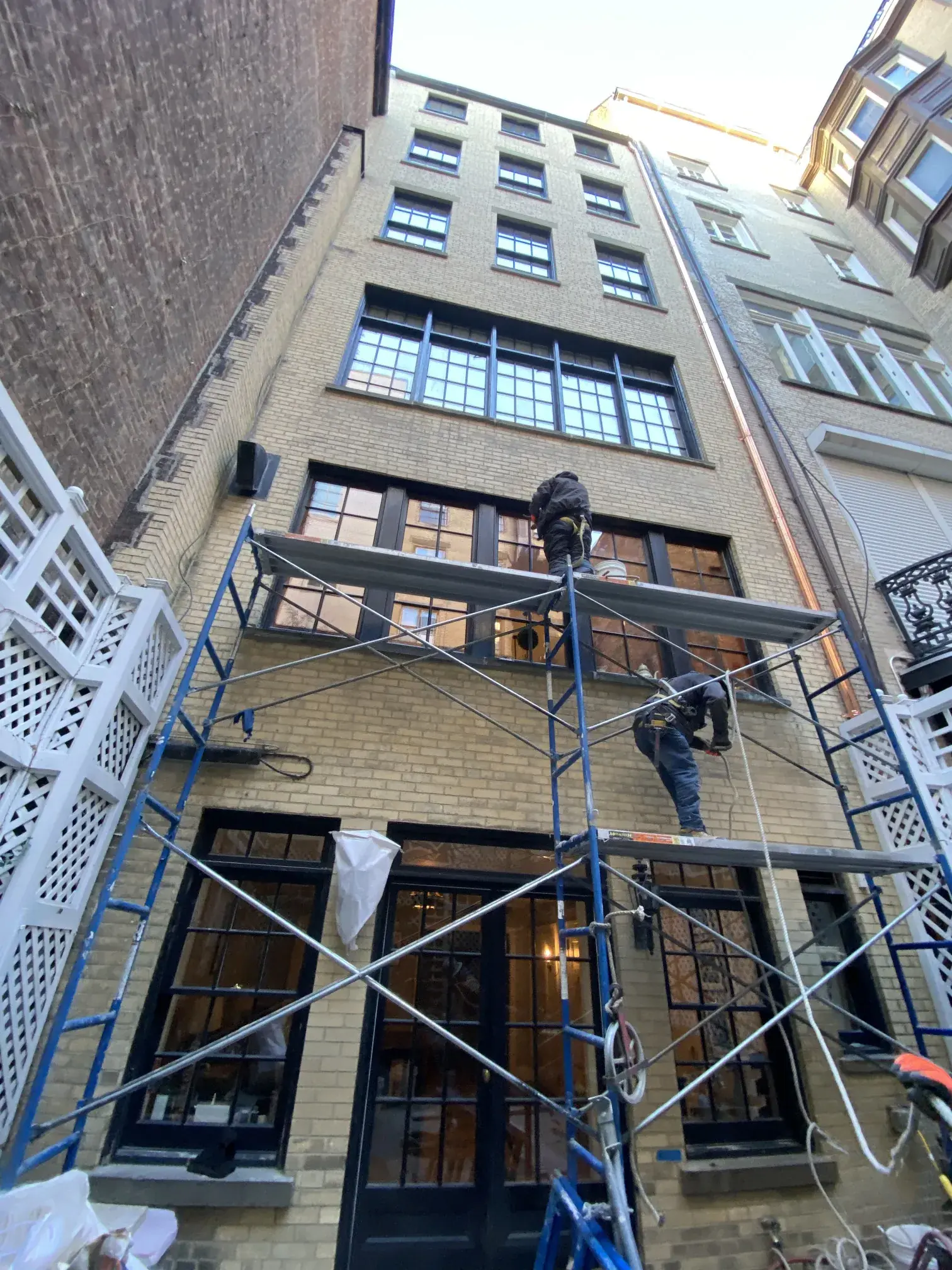
Free Stucco Estimate NYC, then substrate-to-finish repair
Traditional stucco is a three-coat system for a reason. The scratch coat bonds to the lath and provides a mechanical key. The brown coat builds thickness and levels the surface. The finish coat provides weather resistance and appearance. Skip steps or rush the process, and you've built in future failure.
When we repair stucco, we match the existing system. We remove failed material back to sound substrate, verify the lath is secure and rust-free, and rebuild each coat with proper cure times between applications. We don't skim-coat over problems. Compatibility isn't negotiable.
Stucco repairs shouldn't announce themselves. We sample existing stucco, create test patches, and verify color and texture match before full repairs proceed. A structurally sound repair that looks like a patch isn't complete.
What NYC building owners say
Stucco cracking or spalling?
Free assessment. We diagnose the cause before recommending repair.
Maintenance that extends stucco life
Stucco requires less maintenance than most facade systems, but less doesn't mean none.
Well-maintained stucco can last 50+ years. Deferred maintenance cuts that timeline dramatically — and transforms simple repairs into full facade restoration.
Frequently Asked Questions
Built to match. Engineered to last.
We don't just patch stucco — we restore the weather barrier your building depends on.
Related: Exterior Stucco Repair NYC