Three roof systems, and how we choose between them
Most flat roofs in New York are modified bitumen: asphalt blended with a polymer, reinforced with a polyester or fiberglass mat and installed in two plies, a base sheet and a granulated cap sheet. SBS (styrene-butadiene-styrene) is a rubber that keeps the sheet flexible in a January freeze; APP (atactic polypropylene) is a plastic that makes it stiffer, more heat-tolerant and made for the torch. Built-up roofing is the older relative: plies of felt laid in asphalt. PMMA (polymethyl methacrylate) is a liquid resin with a polyester fleece embedded in it that cures into one seamless membrane.
None of the three is the best roof in general. The right one depends on the deck and its condition, how the roof drains, who and what uses it, whether open flame is appropriate, and how many curbs, drains and penetrations the membrane must turn around. A system that suits an open roof over concrete can be wrong for a crowded co-op roof with a bulkhead, a dozen vents and a wood-framed penthouse.
We install all three with our own crews and specify them per building, often in combination: a two-ply SBS modified bitumen roofing system across the field, with PMMA at the details too tight or too crowded for sheet goods. One crew, one set of details and one warranty path, from the base sheet to the last flashing.
Modified bitumen roofing, built-up and PMMA systems we install
Two-Ply SBS Modified Bitumen
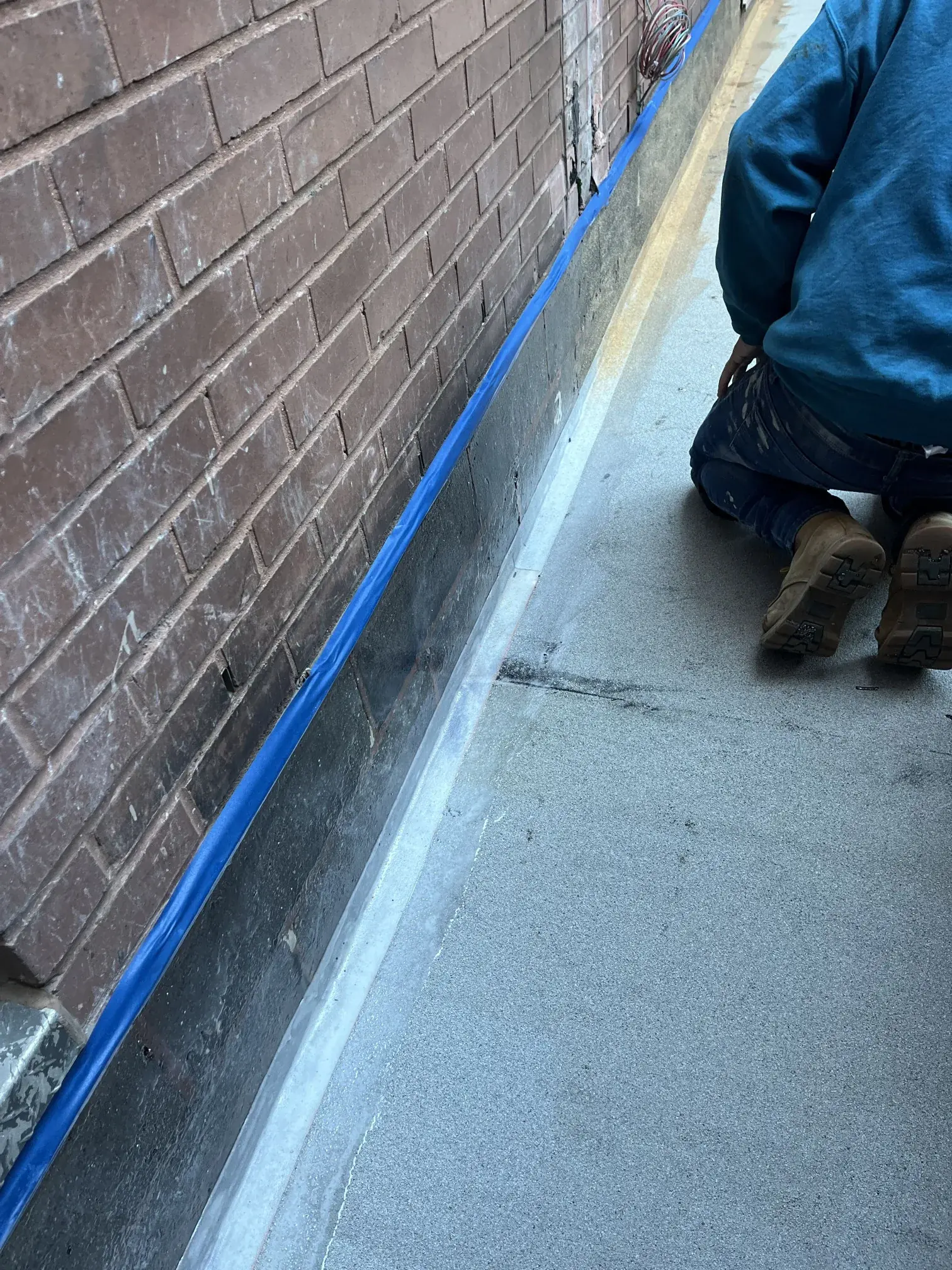
A base sheet and a granulated cap sheet, with the laps of the two plies offset so no seam sits over another. SBS roofing stays flexible through freeze-thaw cycles and building movement, which is why it suits most New York flat roofs. Depending on the deck and the fire-safety plan, the plies are torched, set in cold adhesive or self-adhered.
Torch-Applied APP & Cold-Applied SBS
APP sheets are made to be torched: the torch melts the back of the sheet, which bonds as it cools, and a correct lap shows an even bead of bleed-out along the edge. Cold-applied SBS bonds with adhesive instead, for roofs where open flame is not appropriate.
Built-Up Roofing
Built-up roofing, multiple plies of felt and asphalt with a protective surfacing, is still on many older New York buildings and is still a sound system. Its strength is redundancy: with several plies, one damaged layer does not have to mean a leak.
PMMA Roofing & Liquid-Applied Flashings
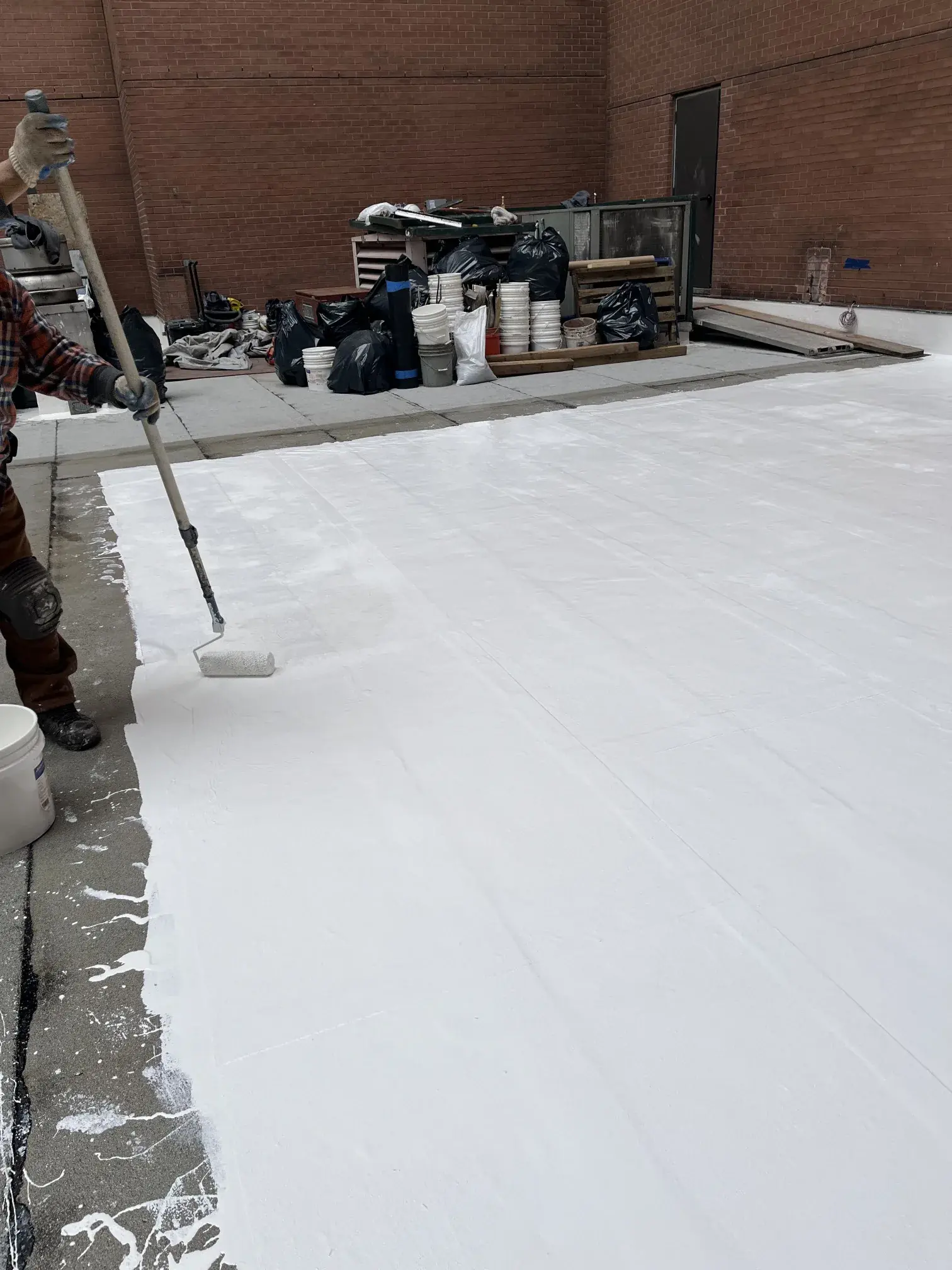
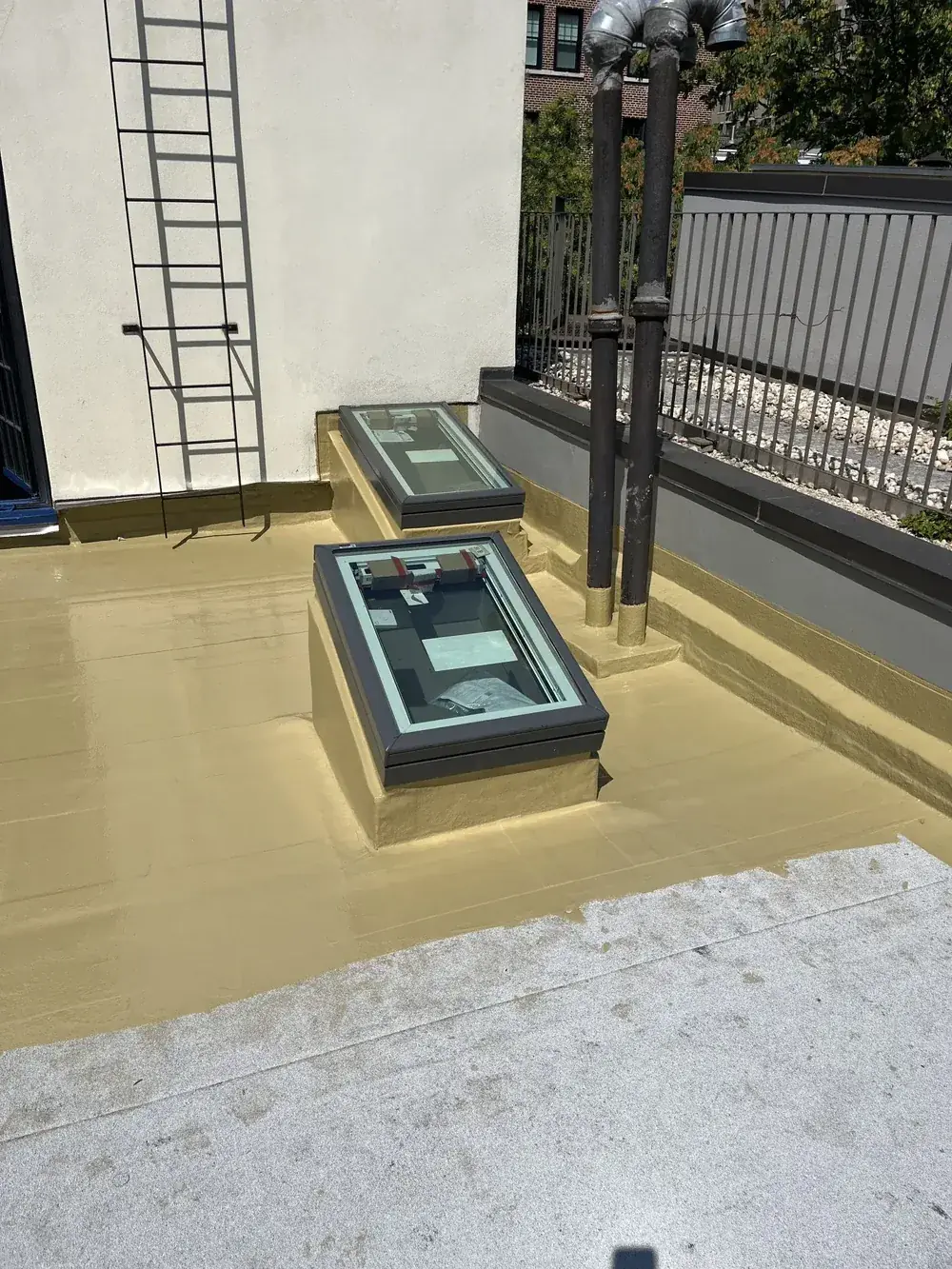
PMMA roofing is a fleece-reinforced, liquid-applied roofing membrane that cures fast, even in cold weather, so a detail can be opened and closed the same day. There are no seams to fail, which makes it the right material at pipe clusters, drains, curbs and parapet terminations, and for PMMA waterproofing on terraces and balconies that take foot traffic.
Choosing a System: Deck, Drainage, Access, Open Flame
Four questions decide the spec. What is the deck, and is it sound? Where does the water go, and does the insulation need tapering to get it there? Who walks on the roof, and what sits on it? Is open flame appropriate here? A full replacement can also bring the energy code's insulation requirements into play, and it is often the right moment to fix the drainage.
Recent Installs: 20 W 11th St & 101 W 79th St
At 20 W 11th Street in Manhattan we installed an SBS modified bitumen roof: full tear-off and replacement, substrate repair, tapered insulation for drainage, bulkhead and skylight integration and parapet flashing details. At 101 W 79th Street a seamless, cold-applied PMMA membrane was chosen to remove seam vulnerabilities around skylights and HVAC equipment, and it carries a 20-year manufacturer warranty. Both projects are on our portfolio page.
Recent NYC projects


From core sample to warranty: how a new roof goes on
Free roof assessment. We walk the whole roof, cut cores to see what is under the membrane (layers, insulation, deck), check for moisture where suspected, and map the drains, curbs and penetrations. Site visit within a few business days.
System recommendation in writing. The proposal names the system, the plies and how they are attached, the insulation and tapered layout, and how each flashing is detailed, with the reasoning. Where there is a real choice between systems, both are priced.
Permits, protection and fire safety. DOB permits, hoisting and roof access are coordinated with the building, and torch work runs under a fire-safety plan with a fire watch after the last pass.
Installation by our own crews. Tear-off proceeds in sections made watertight before the crew leaves each day. Base sheet, then cap sheet with offset laps; flashings at every parapet and curb, PMMA at the details, and new counterflashing and edge metal at the perimeter.
Close-out and warranty. We walk the finished roof with the building manager, hand over photos and a roof plan, register the manufacturer warranty where the system carries one, and issue our written workmanship warranty and a maintenance plan.
What NYC building owners say
Replacing a roof or planning a new one?
Free roof assessment with core sampling across Manhattan, Brooklyn, Queens and the Bronx.
Keeping a new roof system in warranty
Manufacturer warranties assume the roof is looked after. The routine is short.
Frequently Asked Questions
Specified for your building. Installed by our own crews.
Modified bitumen and SBS roofing, built-up and PMMA systems from one licensed contractor and one in-house crew.
Related: Torch Down Roofing & Modified Bitumen Roof Repair NYC